Showing posts with label physics. Show all posts

Friday, March 16, 2012

Great Irish Physicists and Scientists - Redux

Note this was originally posted 3/17/2011. Here is the original link: Great Irish Physicists and Scientists

In honor of St. Patrick's Day (my favorite holiday), I thought I would compile a list of great Irish physicists and scientists.  I will focus on physicists but will include a few other scientists for good measure.  Greatness and therefore inclusion in this list will be measured by me simply by my opinion.  How's is that for scientific!
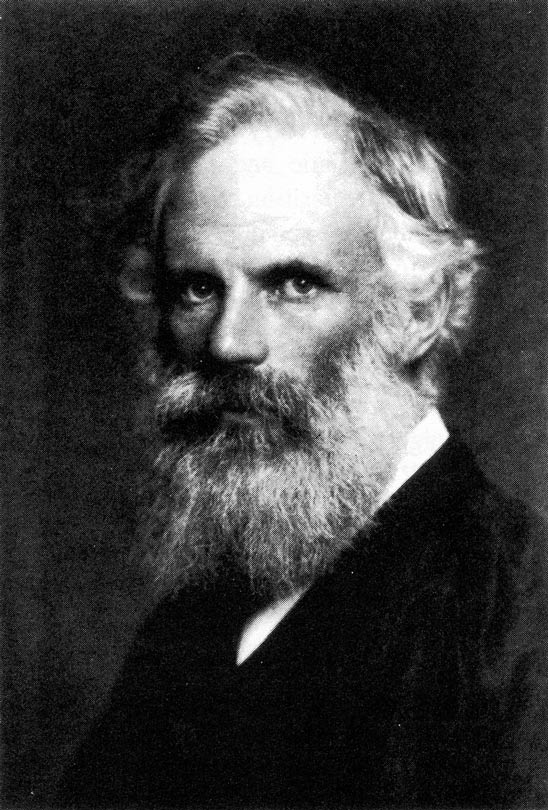
George FitzGerald

His claim to fame is the FitzGerald-Lorentz length contraction - the decrease of the length of an objection (along the direction of motion) with non-zero velocity relative to an observer.  This is an important result of Einstein's special theory of relativity.  Born in Dublin, he was a professor at Trinity College.

Stoney, from County Offaly, is the man who introduced both the concept and the word "electron" for the fundamental unit of electricity.  Also a professor at Trinity College.
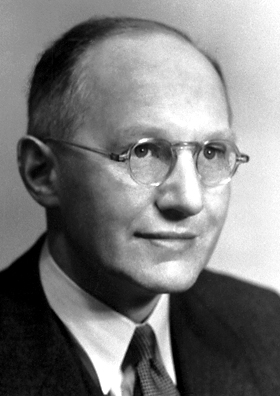
Ernest Walton
Walton is credited to be the first person to (artificially) split an atom and therefore ushered in the nuclear age.  He was a student of Rutherford at the Cavendish lab at Cambridge. Went on to a professorship also at Trinity college.  He won the 1951 Nobel Prize in Physics, along with Sir John Douglas Cockcroft "for their pioneer work on the transmutation of atomic nuclei by artificially accelerated atomic particles."  Currently the only Irishman to have won a Nobel Prize in science.

Frederick Trouton 
Trouton is most famous for Trouton's rule, which states that for various liquids, the entropy of vaporization is same: approximately 88 J/(K mol).  Trouton's rule is typically used to estimate the entropy of vaporization for liquids due to its simple form.  Trouton, born in Dublin, studied physics at Trinity College, where he also received his first academic appointment upon graduation.  He went on to a professorship at Imperial College London.

Sir George Stokes
James Hamilton
Hamilton, born in Sligo, was an early contributor to S-matrix theory.  He went on to make significant contribution to the understanding of the strong nuclear force, specifically in the area of meson-nucleon and meson-meson interactions.  Hamilton held appointments at Cambridge, University College London and the Neils Bohr Institute.

Sir George Stokes
Yes, he is that Stokes - from Navier-Stokes equations (fluid dynamics) and Stokes' Theorem (differential geometry).  Born in Sligo, Stokes was a professor of mathematics at Cambridge.  A contemporary of Lord Kelvin and James Maxwell, Stokes made significant contributions to a variety of fields, including mathematics, fluid dynamics, optics, spectroscopy and chemistry.

Thomson, born in Belfast, was knighted by Queen Victoria was later elevated to Baron Kelvin of Lorgs and is best known as Lord Kelvin. He made major contributions to astrophysics, fluid dynamics, naval engineering, but he is most known for his contributions to thermodynamics, specifically that there is a lower bound to temperature.  The kelvin scale of temperature is named after Thomson.
Aha!  And you thought he was Austrian.  Well he was, but he was also a naturalized citizen of Ireland.  Schrödinger, famous for his contributions to quantum mechanics (hence the Schrödinger equation) and is in fact considered one of the "fathers" of quantum mechanics.  Schrödinger became a naturalized citizen of Ireland during his 17 years in Dublin, during which he helped to establish the Institute for Advanced Studies and was the Director of the School of Theoretical Physics.

Yes, the father of modern chemistry was indeed Irish.  Boyle was born in Waterford County.  He is most famous for Boyle's Law, which says that for a closed system at constant temperature, the pressure is inversely proportional to the volume.  This is something that every high school kid taking chemistry is well aware of.

I am sure there are plenty of others.  Sorry to anyone I have missed!

Wednesday, March 14, 2012

Happy Pi Day! Fun and Facts about Pi


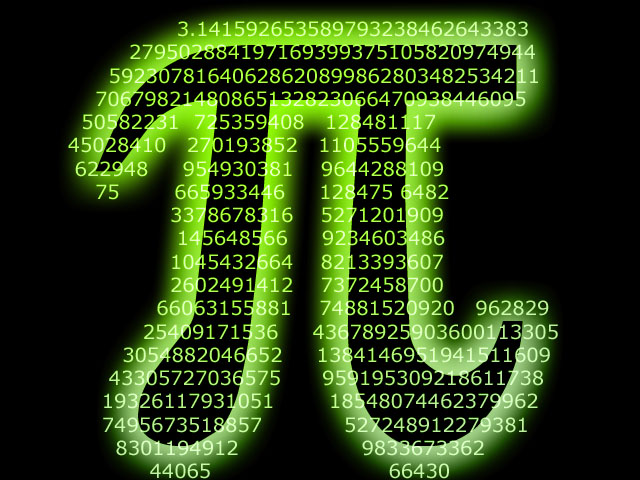
Pi - you know it from all those boring math classes you had to take in school... But Pi is actually much cooler than math class.  Did you know that?  Also, today, March 14 is international Pi day!  No, not pie.  Though I think it is perfectly okay to celebrate Pi day with pie.

Why is it Pi day?  Well, simply because March 14 or 3/14 is the first three digits in the number Pi.  Technically, Pi day starts at 1:59 pm (since the next three digits after 3.14 is 159 [making the first 6 digits 3.14159]).

So, what is Pi?

Pi is simply defined as the ratio of the circumference of a circle (technically a Euclidean circle - circumference is simply the length around the circle) to its diameter.  Remember diameter is just the straight line distance across a circle through its center.  Said less mathy - Pi is the number of times the diameter of a circle will wrap around the circumference.

Pi is also an irrational number.  That simply means it cannot be expressed as a simple fraction (like 22/7 for instance).  Therefore, when you write Pi as a decimal it never ends and it never repeats.  Crazy right?  It just keeps going on forever.

Some interesting facts about Pi:

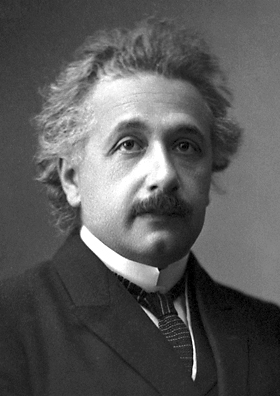
  • Albert Einstein was born on Pi day - 3/14/1879
  • Pi has been studied for over 4000 years dating back to the Babylonians in approximated 2000 BC
  • Beginning at position 762 in Pi, there are six nines in a row.  This is called the Feynman point.
  • In 1897, the Indiana State Legislature tried to "square the circle," and therefore legislate the value of pi.
  • Pi occurs extensively in Physics (and other sciences) especially when a formula or problem has rotational or spherical symmetry involved.
Well, I am going to go and find out where I am going to eat pie for lunch today.  I am suddenly very hungry.  I leave you with a math joke:

Wednesday, March 7, 2012

Spring Break - not so much of a break

No, I actually didn't give any homework.  But they have a midterm the first class after spring break! BWAHAHAHAHAHA!


So, I am on Spring Break this week from teaching.  Yeah, it just is not as cool as it was when I was a student.  I never went anywhere warm (I was a poor punk rock kid in college), but I had a week off of classes where all I had to do was work my 3 jobs.  I could catch up on sleep, go out drinking every night (well that wasn't much of a change) - basically just screw around more than normal.

As a professor... now my spring break consists of catching up on all the work I put off because it could wait until spring break, grading all those things I need to grade, tracking down students who are failing, finishing up research projects that get left half finished, finishing up proposals that are due soon, and falling asleep earlier than expected... E X C I T I N G, right?

Teaching has also taught me a lot about statistics.  I have just under 400 students in my lecture.  With 400 students you basically get the full range of types of humans.  Every crazy little nuance in the human character is likely to be present.  And they all come to me with their problems regarding this class... because, well, I am in charge am I not?

So far during this semester I have had:
-students cry during my quizzes and exams (yes, more than one...)
-a student try to cyberbully me by email (it was truly hilarious)
-students asking to stay in my class while in jail
-students try to get me to get them jobs... (WTH... you know me 6 weeks and you want me to try and pull string for you?????)

And you want to know the most frustrating part of it all - I have to act like an adult.  I have to follow the rules.  I have to be the one to do the right thing concerning it every time.  It takes so much more work to be stuck being the mature, responsible one in the student-teacher relationship.  Annoying.


Wednesday, January 11, 2012

Because I just don't have enough to do...

Oh new year, you make me kinda crazy...

But in a good way, I suppose.  So, with the first of the year, I started not one but two new jobs...  Like I needed any more to do.

I am no longer a postdoc!  HURRAY!  The world rejoices.  I am a Research Professor now, which is cool.  But basically, nothing has changed for my job.  I still do a huge amount of research.  I just get paid to the research by this big name state university.  A Research Professor is not what we call a Tenure Track position.  That is, I am not teaching any classes.  I am just doing research.  I wish I was Tenure Track, but I know I will get there eventually.

However, I have started as an Adjunct Professor at another, lesser big name university.  Teaching an introductory astronomy course.  Which has been a whirlwind, to say the least.  I teach an hour and a half lecture twice a week and a two hour lab once a week.  That doesn't count all the preparation, driving to and from one job to another, and dealing with the insanity that is college students in the digital age.  It appears that simply having an email address is cause enough for them to think I will solve all their problems for them... I am slightly annoyed.

Yesterday, I had my first lab and lecture.  Lecture went fantastic.  It was everything I remember loving about teaching.  Lab, on the other hand, was a sort of fiasco.  There may or may not have been a crying student...

Either way, I am really happy with how the new year has started, but I am so damn busy... I think I dreamed last night about getting a good night sleep.  That is sad.

In little munchkin news, Sweet Little Hellion has started to be hardcore potty trained.  We are probably going to forgo the nighttime Pullup this weekend since she has started asking to not wear it... I am so ready to be diaper free in the Berserker Clan.  S O  R E A D Y !

Wednesday, December 14, 2011

Searching for the Higgs boson - new LHC results

Some of you may have heard that 2 of the experiments at CERN (the European particle collider built to find the Higgs boson).

So, what is the Higgs boson?  Well, in the standard model of particle physics, the Higgs boson is the particle which couples to everything else and gives those particles mass.  It is a strange notion of quantum field theory and may be difficult to understand.  Basically, the language of particle physics is quantum field theory.  Quantum field theory tells us interactions between particles are mediated by bosons.  For a more concrete example, electromagnetic interactions are mediated by photons (the interaction (or gauge) boson of quantum electrodynamics - the quantum field theory that describes electromagnetic interactions).  So, when two like charges repel each other - they two charges are exchanging a bunch of photons to accomplish that interaction.  I hope that helps in some way.

Here is a summary of particle interactions in the standard model:


There is a great video put out by Fermilab (a US particle physics lab) on searching for the Higgs and how it is done:


So, recent results by two different experiments at CERN, ATLAS and CMS, both have constrained the mass of the Higgs to a much smaller region.  CMS gives the limits of 115-127 GeV/c² and ATLAS gives the limits of 116-131 GeV/c². 

For those with a little more interest here are some plots from Sean Carrol's blog (he borrowed from others, so follow the trail down the rabbit hole if you like!).

 Here are the ATLAS preliminary results:
And the CMS preliminary results:
The way you read these plots is this: Any time the black dotted line dips below 1 on the vertical scale, these mass regions for the Higgs are excluded.  Anytime the black line dotted line rises above the yellow shaded region, there is increased confidence the Higgs may be hiding in there.

ATLAS is seeing a peak at approximately 126 GeV/c², while CMS is observes a peak at about 124 GeV/c².

Guido Tonelli, the Spokesperson for CMS said this at the CERN Higgs Seminar:
"…we observe in our data a modest excess of events between 115 and 127 GeV that appears, quite consistently, in five independent channels. The excess is most compatible with a SM Higgs hypothesis in the vicinity of 124 GeV and below, but the statistical significance (2.6 sigma local and 1.9 sigma global after correcting for the LEE in the low mass region) is not large enough to say anything conclusive."

While Fabiola Gianotti, the ATLAS Spokesperson said this (also at the CERN Higgs Seminar):
"We observe an excess of events around m_H ~ 126 GeV:   local significance of 3.6 sigma, with contributions from the  H –>2 gammas (2.8 sigma), H –> ZZ –>4l (2.1 sigma), H –> WW –> lvlv (1.4 sigma), SM Higgs expectation: 2.4 sigma local –> observed excess compatible with signal strength, the global significance (taking account Look-Elsewhere-Effect) is ~2.3 sigma"

So, the big take away is that the LHC is closing in on the Higgs, but there is still a lot of data to collect next year.  It should also be noted that the LHC just finished the 2011 runs about 6 weeks ago.  So these results are very preliminary, but also very promising!

Wednesday, August 31, 2011

NASA names new fellowship after prominent female astrophysicist

Yesterday, I received the following announcement in my inbox:

ROSES-11 Amendment 23: New proposal opportunity: Appendix D.9,  The Nancy Grace Roman Technology Fellowship (RTF) Program in  Astrophysics

A new NASA program, The Nancy Grace Roman Technology Fellowship Program in Astrophysics, is named after a very a very distinguished American astronomer. Nancy Grace Roman's celebrated career included multiple scientific and technical achievements at NASA and her important contributions to the design of the Hubble Space Telescope.

From the announcement:

The goals of the Nancy Grace Roman Technology Fellowship (RTF) program in Astrophysics are to give early career researchers the opportunity to develop the skills necessary to lead astrophysics flight instruments/projects and become principal investigators (PIs) of future astrophysics missions; to develop innovative technologies that have the potential to enable major scientific breakthroughs; and to foster new talent by putting early-career instrument builders on a trajectory towards long-term positions.
This is a 5 year fellowship, which is the most substantial NASA astrophysics fellowship to date, compared to the typical 2-3 year awards that have previously existed.


This is really great news for Astrophysics.  Why?  First it is a new early career fellowship - these are very important to those of us just starting out in our careers.  Second, it is named after a woman.  This matters.  Celebrating brilliant women in physics helps future female physicists know that they are welcome to the field.  Physics is truly lacking in equal participation by women and we are missing a key source of intelligence, brilliance, and creativity in our field by not having equal participation by women.  So, thank you NASA!

Tuesday, August 23, 2011

Struggle

So, I have been sort of in a rut lately.  From a work standpoint and a personal standpoint. For work, I am a physicist, but I rarely get to sit down and do any physics.  My days are taken up by writing papers (not research), fixing other people's problems (not research), reporting my lack of progress on my research, and editing papers for other people (not research).  It can sometimes really annoy me.

On top of this all, I constantly am feeling quite guilty about living 1000 miles from both my family and my wife's family.  My kids only get to see my parents about 2 times a year and they get to see my wife's mother about 4 times a year.  Not all that often.  And it is all because of me.  I chose to be a physicist and I chose to take a postdoc 1000 miles from my family.  Now, to be honest, it was the only job offer I had.  Though, it was my dream offer, so I still feel guilty because I would have picked it no matter what I was offered (most likely).

This guilt has left me feeling like where I have lived for 3 years is not home.  I have never taken an interest in my neighborhood, the town or the region.  I really don't have any close friends outside of work and have never really felt the need to have them.  Why?  Because I don't view this as home yet. 

So, sometimes things just start to pile up on my emotionally.  I don't have a lot of outlets to get away to - everything I do is with my wife and kids.  No close friends - no hang outs - no nothing really.  Don't get me wrong - my wife and kids are great.  But even just once a month - to be able to get out and away - would be priceless.  It is my fault really - I don't ever make the effort to meet people or connect with the people I do happen to meet.

This all starts to add up and affect me in ways I don't always see.  For the last month or so, and especially the last week, I have been incredibly irritable.  Snapping at the kids and wife.  Don't get me wrong, I have never been a person who really thinks before responding.  I say things without thinking all the time. I wear my heart on my sleeve and you can quickly and correctly ascertain my mental state simply by the look on my face.  I don't really have an inner firewall that stops me from saying stupid and hurtful shit.  It just comes out. 

It is usually not a problem because I am usually a very easy going, laid-back person.  In general, I am very happy and so that cruelness that I have had lately is so very surprising to me.  So, I have spent the last few days - since Thursday really - trying to pin it down - where is it coming from?  I think it is that I just don't have any releases anymore.  I don't have any outlets other than talking with my wife. 

And, really, one person can only take so much bitching and moaning.  On top of that, I am not a talk it out kinda guy.  I am a let it process and work it out on my own type.  I am also the kind of person who always looks for solutions which - I find out from my wife - is not what people usually want to hear when they have problems.  They just want someone to listen.  I have been working on that also... but I digress.

So, this lack of an outlet and feelings of guilt are sort of culminating into a nasty little rut.  What I really want to do is spend a night out drinking with my wife and friends, then spend the next day really hung over.  But all my good friends are 1000 miles away. Then I need to remind myself that I really love my job - I usually look forward to work (other then my kids not being here with me) - and that I have a pretty great life.  Sometimes, though, I just cannot see the forest for the trees.

Tuesday, August 9, 2011

Earth's Antimatter Radiation Belt

A great paper came out on the arXiv last week: O. Adriani et al., The discovery of geomagnetically trapped cosmic ray antiprotons, arXiv:1107.4882v1. Here is the abstract:

The existence of a significant flux of antiprotons confined to Earth's magnetosphere has been considered in several theoretical works. These antiparticles are produced in nuclear interactions of energetic cosmic rays with the terrestrial atmosphere and accumulate in the geomagnetic field at altitudes of several hundred kilometers. A contribution from the decay of albedo antineutrons has been hypothesized in analogy to proton production by neutron decay, which constitutes the main source of trapped protons at energies above some tens of MeV. This Letter reports the discovery of an antiproton radiation belt around the Earth. The trapped antiproton energy spectrum in the South Atlantic Anomaly (SAA) region has been measured by the PAMELA experiment for the kinetic energy range 60--750 MeV. A measurement of the atmospheric sub-cutoff antiproton spectrum outside the radiation belts is also reported. PAMELA data show that the magnetospheric antiproton flux in the SAA exceeds the cosmic-ray antiproton flux by three orders of magnitude at the present solar minimum, and exceeds the sub-cutoff antiproton flux outside radiation belts by four orders of magnitude, constituting the most abundant source of antiprotons near the Earth.
The red data points are the measured antiproton flux in the South Atlantic Anomaly region.
 So, most people have heard of the Van Allen radiation belts.  These are composed protons and electrons trapped by the Earth's magnetic field at a certain distance above the Earth's surface.  The proton component is thought to be due to the decay of neutrons produced by galactic cosmic ray interactions with the Earth's atmosphere.  The cartoon description is as follows: A galactic cosmic ray (fully ionized, highly energetic heavy ion) and an atmospheric molecule experience a nuclear interaction.  A neutron is produced which decays into a proton (and an electron and an antineutrino).  In addition, there will be a contribution from direct proton production from the nuclear interaction - that is ion + neutral nucleus --> protons + lots of other stuff.  These are the basic process which produce the protons that are trapped in the Van Allen belts. 

The production of the antiprotons is not from decay, but only from the direct interaction.  With enough energy (which cosmic rays have - there are particles in the cosmic ray spectrum with energies orders of magnitude above that CERN uses), antiprotons will be produced in the nuclear interactions.  Some of these will escape the atmosphere and should become trapped in the Earth's geomagnetic field.  Now the PAMELA experiment, as reported in this article, have confirmed this experimentally!

Introduction and Brief History of Particle Physics

There is a really great article over at Physics Today written by Steven Weinberg on particle physics entitled Particle physics, from Rutherford to the LHC. 

From the article:
It is clearly necessary to go beyond the standard model. There is a mysterious spectrum of quark and lepton masses and mixing angles that we have been staring at for decades, as if they were symbols in an unknown language, without our being able to interpret them. Also, something beyond the standard model is needed to account for cosmological dark matter. 
It is now widely understood that the standard model is just an effective field theory (see the box above), the low-energy limit of some more fundamental theory involving a scale of mass much larger than the masses with which we are familiar. That means we should expect the standard model to be supplemented with interactions that are not renormalizable in the usual sense—in fact, with all interactions allowed by symmetry principles—but suppressed by denominators proportional to powers of the large new mass. Infinities are still absorbed in a redefinition of the constants of the theory, but the number of constants that need to be redefined is no longer finite.
 The box he is talking about is here:
There is a great layman's introduction to effective field theories - which I find very interesting and did part of my dissertation on.


Wednesday, June 1, 2011

Know thyself

This blog has made me become quite introspective. Which, I suppose, is to be expected since the first incarnation of this blog was a way for me to deal with my wife having cancer.

Mainly, I have been able to take a look at what I really want out of life and if what I am doing professionally is really lining up with those goals.  I have thought a lot about what drives me and what makes me happy.  These types of things have changed over time.  Especially since I had kids.

Here is a quick run down of the things that have driven me over my life:

Pre-pubescent Berserker: Being good at soccer and school, pleasing my parents, having friends, doing what's right. Hey- I was a kid.  I was a good kid (I think).  In reality, my world was very small.

Friedrich Nietzsche.  Sweet 'stache!
Adolescent Berserker: Sex, girls, punk rock, independence, art, music, deeper questions of life, rebellion, fun, friends. Extreme change here.  I was insane as a teen.  The onset of hormones drove me completely nuts.  But I also became, in some ways, more introspective.  I would read Nietzsche during my calculus class in high school (no I still don't really understand him... but his essays on nihilism really spoke to the adolescent me).  I really wondered about and explored the meaning of life... well between trying to someone to buy me beer and trying to find a place for my girlfriend and me to have sex... you know... priorities.

Time for me to grow up? I don't want any part.
Early College Berserker: Sex, girls, punk rock, aggression, independence, rebellion, beer. In some ways, my first couple of years in college were much simpler than high school.  I went to a really big college compared to my tiny suburban high school where I knew every single person.  I met a ton of great people in college who still mean a great deal to me.  I had a lot of fun without any parental oversight.  I played in a punk band that toured the midwest - playing crappy clubs and basements.  I worked for a living and lived in squalor.  At one point I worked 3 jobs to pay the bills and beer tab and tuition.  I was still young, stupid, and invincible.  I also cultivated a violent streak.  In college I filled out.  I was no longer a tall, lanky string bean.  And I had a chip on my shoulder. If a guy wanted to be all macho and try to show off by making fun of the weirdo punk kid, I would pop him in jaw and kick him in stones.  I took a few nasty beat downs too.  I was dumb and young and lucky to live through it.

All cool people have mustaches right?
Late College Berserker: Sex, my girl, science, physics, learning, the future of my life, punk rock. I met my wife in college and looking back it was a major turning point in my life.  She gave me an anchor rope to hold onto.  She made re-evaluate how I made decisions.  I was also maturing and starting to think before I acted.  About damn time.  Also, I realized that I should start really applying myself in college. This happened right before I met my wife.  I was always a good student.  Things came easy for me.  I didn't have to work hard for good grades.  But, I was paying thousands of dollars for this education, I should probably make something out of it.  In addition, I rediscovered my love of science, specifically physics.  So I focused on physics.  Started doing research.  I loved it.  I won a few scholarships and research fellowships.  Hey, I was actually GOOD at this.  And it was sure better than working at subway.  I also started teaching physics.  I liked that too!  Maybe I could actually do this for a job?!?  Science actually became more important to me than punk rock.  It was a weird time.

Early Grad School Berserker: Sex, my fiance, PHYSICS, punk rock, camaraderie  It was grad school.  You can't judge me... I lived and breathed physics.  60 hours of quantum mechanics and electrodynamics a week.  Cool.  Sleep is stupid anyways.  I also got engaged and married  My poor soon to be wife...  My band also broke up.  We all had kind of grown our separate ways.  Man, that was fun!  Playing shows that is.

Late Grad School Berserker: Wife, child, sex, physics, GRADUATION. While I was in grad school, my wife was diagnosed with cancer.  She is fine now, thankfully.  We were living together, 1000 miles away from our families and she had cancer.  We really only had each other.  It is the kind of thing that defines a relationship.  It also helps put dumb things in context.  As for school, everyone in grad school eventually gets sick of being poor and stuck in grad school.  So you bust your ass and finish your research.  I just did it with an infant strapped to my chest.  I actually wrote an entire chapter of my dissertation from 2-6 am with my infant son strapped to my chest.  We had our first kid while I was still in grad school and it was not as horrible sounding as it seemed.  I was on a fellowship, so I worked from home 3 days a week (really worked nights) and my wife worked from home 2 days a week.  We couldn't afford daycare, so we made it work.  Luckily she had a great boss!

That pretty much brings us up to date.  Well kind of.  So, what drives me today.  Sadly and gratefully, much of the same.  Wife, kids and sex probably at the front.  Yeah, I had sex on every list but never mentioned it.  I think sex and a sex drive are sort of a constant in a young man's life.  Always there in the back of your head...

There are some things that drive me now, that I would have never thought would motivate me.  Money is important to me.  Not that important, but I need to clothe and feed the little monsters that are my spawn. Plus, I like to buy them things.  Just admitting that money is a driving force in my life, even a small one, makes my punk rock soul rage and spin inside me.

Be true to thyself.  I am a wild dichotomy of social rebellion, punk rock scientist, father and husband.  I am often at odds with myself about anything as mundane as what grocery store to shop at (small, local expensive vs. corporate sell out) to as complex as how to handle talking about death with my kids (easy lies vs. truthful pain).

Know thyself.

No matter how difficult that may be.

Wednesday, May 4, 2011

Testing Einstein - NASA's Gravity Probe B confirms relativity

Space-time around the Earth and Gravity Probe B

We are living in exciting times.  The results of the NASA's Gravity Probe B experiment will one day be written up as one of the classic experiments of modern physics.

Gravity Probe B was launched in 2004 to test Einstein's theory of general relativity.  For the non-physicists in the crowd, this was the change to gravity that Einstein introduced.  Gravity was thought to be well understood by simple Newtonian physics.  You through a ball on Earth, it follows a ballistic trajectory explained very simply by college freshman level physics (neglecting atmospheric drag anyway).

Einstein introduced the idea that gravity can simply be described by the geometry of the situation.  It generalizes Newtonian gravity and special relativity (also Einstein's creation) into a geometric description of gravity based upon the idea of spacetime.  Very basically, the curvature of spacetime is directly related the energy and momentum of anything subject to the gravity.  It was revolutionary.  Still is I believe.

Gravity Probe B will test two different effects.
Gravity Probe B was launched to test the effects of Earth's movement, both around the Sun and spinning on its own axis, on the gravitational environment near Earth.  General relativity tells us there should be two different effects seen near Earth: Frame-dragging and Geodetic precesion.

The frame-dragging is due to the rotation of the Earth around its axis.  The geodetic precession is due to the mass of Earth moving through spacetime.

Through some very impressive engineering the Gravity Probe B satellite uses spinning gyroscopes to measure the two effects.  The team who developed the experiment needed to do invent and develop some serious equipment to perform this experiment.  They invented 13 new technologies for this experiment.

In addition, the precision of this experiment was amazing.  They need to be able to measure the drift of the gyroscopes to a precision of 0.0005 or 5/10000 of an arcsecond.  An arcsecond is 1/3600 degrees.  So, they needed a precision better than 1/7,000,000 of a degree.  Amazing!  Truly Amazing!

Some links of interest:
Gravity Probe B project page
Gravity Probe B wiki page 
NASA Press Release about results

Monday, May 2, 2011

Traveling, illness, death and birthdays

Hiking trail near Boulder, Colorado
All of last week I was at a workshop in Boulder, Colorado.  It was my first time at this workshop and the first workshop I have been to - as opposed to a conference.

The basic differences between a workshop and conference is this: scale.  A conference is typically much larger, has concurrent session going on, and has many topics covered.  A workshop is typically smaller, has only one track of talks, and is based on a singular topic. 

During a conference, there are typically a few times during the conference that nothing is going on that is of interest to me.  So I go and work in the hotel or at a coffee shop or something.  I tend to be ultra-productive during these times, finishing up little projects, writing up research papers, or really digging into something I just haven't had the time to get to.

I found out last week that a workshop does not allow this to happen.  I was in talks and discussions from 8 am until 5 pm everyday.  I learned a crap-load.  But I was exhausted.  COMPLETELY EXHAUSTED.

Before I left, my daughter, Sweet Little Hellion, was sick with pneumonia.  Not bad, but she was down and out for sure.  So before I left on travel, I spent time taking care of her and trying to leave Beautiful Wife as much free time as possible as she (BW) was going to be stuck dealing with the Berserker Brood for the week all on her lonesome.  So I was more than a little tired when I left for my trip...

George Marie, first member of the Berserker Brood.  RIP.
On top of all this, BW called me bright and early last Wednesday morning telling me she was bringing George (our cat) to the Vet hospital.  She was obviously very sick - couldn't stand up on her own, hadn't used the litterbox in a few days, wasn't taking food or water.  We had to put her down that morning.  Kidney failure.  Super bummed.  Nothing really strikes chord of grief like your family dying and George had been a part of my family since I first met my wife.

Funny thing about George, she was a girl cat named George, George Marie in fact.  BW has a goofy sense of humor and she had ALWAYS wanted to have a pet named George.  This stems from her love of all things looney tunes.  And looney tunes would do a bit based on the book "Of Mice and Men" about a little "wabbit" name George.  She was all full of attitude, all 7 pounds of her. 

George was 11 years old when she died.  All she ever wanted out of life was to lay in my lap - all day long.  When I was doing my PhD courses, she would lay on my lap under the table for the hours upon hours of homework I would do.  During the last few years my patience for having another little furnace on my lap after I put the kids to bed had diminished markedly.  I regret not having a little more time for her.  I regret not getting to say goodbye.  I really wish I could have been there when she died.

So that morning I had to have breakfast with 3 work colleagues, my former boss and a big-wig in our research discipline.  Supposed to schmooz and network... I failed.  Oh well.

Worse than that is explaining to a soon to be 2 year old and soon to be 4 year old that their kitty is not coming back.  Then explaining all about death.  Nothing makes you feel less adequate as a parent than having to explain all about death.  And how you have absolutely no answers and there is nothing anyone can do about it...  sucks, big time sucks.

Happy Birthday SLH!
Photo Credit: D Sharon Pruitt
From Wikimedia Commons


On top of all that, we celebrated Sweet Little Hellion's 2nd birthday yesterday.  Beautiful Wife made a carrot cake from scratch (oh, the god's know I love carrot cake... so good!) with yellow frosting - SLH's favorite color.

Little Berserker Spawn refused to eat on the princess plates, so I spent most of dinner having a little talk with him about the situation in the other room.  Trying to make him see it from her point of view.  Limited success.

After almost throwing a fit about not wanting to eat on Princess Plates, LBS didn't have any trouble wearing the pretend play high heels his little sister got as a present from my wife's brother and his wife... Don't worry, I have blackmail pictures.  MUUHAHAHHAHAHA! (evil laughter!).

Friday, April 1, 2011

Major Discovery at CERN!

The Hugs has been found, the Hugs has been found!  The Hugs Boson has been discovered at CERN!  It is a very snuggle particle!

Sorry all you poor particle physicists, you have been looking in the wrong spot all along.  So sorry!  Have a hug instead?!?!

Geek humor, gotta love it!

Tuesday, March 22, 2011

12 year old Physics Genius has Asperger's syndrome

When Jacob Barnett was 3 years old his parent brought him to visit Holcomb Observatory and Planetarium at Butler University.  When the speaker at the planetarium asked the audience why the moons around Mars were potatoe shaped, not round.

Jacob raised his hand and asked "What are the masses of the moons?"

After the researcher explained the masses, Jacob answered the question, that the gravity of the moon was insufficient compared to the gravity of Mars to pull the moon into a spherical configuration.

HE WAS 3 YEARS OLD!

And do you want to know the real head shaker is?  At age 3 Jacob was diagnosed with Asperger's syndrome, an Autism spectrum disorder.  Later is his early life, he was struggling in school, withdrawing and basically having a very tough time.  His parents took him for his third psychological evaluation 2 years ago.

The psychologist recommended a radical change in his schooling.  Instead of making him stay in public school, bored to tears and frustrated, the psychologist recommended that Jacob should receive instruction at the proper level of his knowledge.  He needed to take PhD level classes in math, physics and astrophysics. 

Truly amazing.

Now Jacob is set to start doing research on cosmology and astrophysics.  He has his own questions.  He actually questions the big bang.  He claims to have done a calculation, using big bang nucleosynthesis, of how long it would take to create 2 percent of the universe's carbon.  He finds a value on the order of nanoseconds to microseconds. Much too fast.

I read that he has a youtube video explaining some things about the big bang and some of his own original ideas, but I was unable to find it.

While this is a truly great human interest story, what I find compelling is the Asperger's syndrome portion of the tale.  Let me be clear, he is not a savant.  He has Asperger's syndrome, a well defined medical syndrome. 

It may be well defined, but the whole autism spectrum is so poorly understood.  Many people have many misconceptions about autism in general.  Not every kid with Asperger's or autism is good at math or art or anything really.  Some of them will function very well in society.  Some of them may not ever get to live on their own.  Their brains are fundamentally different than a normal brain for some reason.  I am not even close to an expert on autism or Asperger's.  But I do hold the hope that we can come to better understand the autistic brain through science and medicine.  I really think if we can come to understand how the Autistic brain develops it will lead to great insight into normal brain function and cognitive neuroscience.


This post based on the article by Dan McFeely published in the IndyStar on March 20, 2011.

Thursday, March 17, 2011

Great Irish Physicists and Scientists

In honor of St. Patrick's Day (my favorite holiday), I thought I would compile a list of great Irish physicists and scientists.  I will focus on physicists but will include a few other scientists for good measure.  Greatness and therefore inclusion in this list will be measured by me simply by my opinion.  How's is that for scientific!
George FitzGerald

His claim to fame is the FitzGerald-Lorentz length contraction - the decrease of the length of an objection (along the direction of motion) with non-zero velocity relative to an observer.  This is an important result of Einstein's special theory of relativity.  Born in Dublin, he was a professor at Trinity College.

Stoney, from County Offaly, is the man who introduced both the concept and the word "electron" for the fundamental unit of electricity.  Also a professor at Trinity College.
Ernest Walton
Walton is credited to be the first person to (artificially) split an atom and therefore ushered in the nuclear age.  He was a student of Rutherford at the Cavendish lab at Cambridge. Went on to a professorship also at Trinity college.  He won the 1951 Nobel Prize in Physics, along with Sir John Douglas Cockcroft "for their pioneer work on the transmutation of atomic nuclei by artificially accelerated atomic particles."  Currently the only Irishman to have won a Nobel Prize in science.

Frederick Trouton 
Trouton is most famous for Trouton's rule, which states that for various liquids, the entropy of vaporization is same: approximately 88 J/(K mol).  Trouton's rule is typically used to estimate the entropy of vaporization for liquids due to its simple form.  Trouton, born in Dublin, studied physics at Trinity College, where he also received his first academic appointment upon graduation.  He went on to a professorship at Imperial College London.

Sir George Stokes
James Hamilton
Hamilton, born in Sligo, was an early contributor to S-matrix theory.  He went on to make significant contribution to the understanding of the strong nuclear force, specifically in the area of meson-nucleon and meson-meson interactions.  Hamilton held appointments at Cambridge, University College London and the Neils Bohr Institute.

Sir George Stokes
Yes, he is that Stokes - from Navier-Stokes equations (fluid dynamics) and Stokes' Theorem (differential geometry).  Born in Sligo, Stokes was a professor of mathematics at Cambridge.  A contemporary of Lord Kelvin and James Maxwell, Stokes made significant contributions to a variety of fields, including mathematics, fluid dynamics, optics, spectroscopy and chemistry.

Thomson, born in Belfast, was knighted by Queen Victoria was later elevated to Baron Kelvin of Lorgs and is best known as Lord Kelvin. He made major contributions to astrophysics, fluid dynamics, naval engineering, but he is most known for his contributions to thermodynamics, specifically that there is a lower bound to temperature.  The kelvin scale of temperature is named after Thomson.
Aha!  And you thought he was Austrian.  Well he was, but he was also a naturalized citizen of Ireland.  Schrödinger, famous for his contributions to quantum mechanics (hence the Schrödinger equation) and is in fact considered one of the "fathers" of quantum mechanics.  Schrödinger became a naturalized citizen of Ireland during his 17 years in Dublin, during which he helped to establish the Institute for Advanced Studies and was the Director of the School of Theoretical Physics.

Yes, the father of modern chemistry was indeed Irish.  Boyle was born in Waterford County.  He is most famous for Boyle's Law, which says that for a closed system at constant temperature, the pressure is inversely proportional to the volume.  This is something that every high school kid taking chemistry is well aware of.

I am sure there are plenty of others.  Sorry to anyone I have missed!

Thursday, January 20, 2011

Cold Fusion... Again... without a peer reviewed article... say it ain't so

PhysOrg.com is carrying an article about a pair of Italian scientists claiming to have created a cold fusion reactor. The article can be found here: Italian scientists claim to have demonstrated cold fusion.

The pair of scientists, Andrea Rossi and Sergio Focardi of the University of Bologna, held a press conference to announce their findings.  Sound familiar?  Yep, this is just how Martin Fleischmann and Stanley Pons announced their cold fusion "discovery" back in 1989.  My doubts kept growing as I read through the article.

The PhysOrg article also states that Rossi and Focardi attempted to publish their results, but were rejected from peer-reviewed journals due to the lack of an explanation or even theory for the fusion claim.  So, they publish their paper in a journal run and founded by themselves... My skepticism increases.

Sure, you can argue let the experimental data speak for itself.  After reading quickly through their paper it lacks a lot of information.  The quote from the PhysOrg article sums up my feelings pretty well:
Where are the quantitative descriptions of these copper radioisotopes? What detectors were used? Have the results been replicated by independent researchers? Pardon my skepticism as I await real data. --Steven E. Jones

Monday, January 10, 2011

Tevatron ends 24 years of research at end of FY2011

The Department of Energy has rendered its decision regarding the career of the Tevatron: pack up your office old fella, time to call it quits.  The proton-antiproton collider is located just outside of Chicago, IL at Fermilab.  This is the machine which brought the discovery of the top quark (see Abe et al. (CDF Collaboration) and Abachi et al. (D0 Collaboration)) in 1995 which rounded out the 3rd generation of quarks.  This happened 18 years after the discovery of the bottom quark in 1977 by Lederman also at Fermilab.

In a letter dated January 6, 2011 to Melvyn Shochet, the director of the Office of Science at the Department of Energy, W. F. Brinkman writes:


Professor Melyn Shochet
Chairman, High Energy Physics Advisory Panel
Department of Physics
University of Chicago
5630 S. Ellis Ave
Chicago, IL 60637


Dear Professor Shochet:
I am writing to convey the Office of Science’s response to the recent High Energy Physics Advisory Panel (HEPAP) report on extending the operation of the Tevatron at Fermi National Accelerator Laboratory. As you know the Office of Science received in the summer of 2010 a widely supported proposal to extend operation of the Tevatron through FY 2014. At our request, HEPAP and its subpanel, Particle Physics Project Prioritization Panel (P5), responded quickly and analzed both the physics merits of the proposal and the potential impacts on the rest of the field. HEPAP and P5 provided valuable and timely advice to the Office of Science that informed our FY 2012 budget request. I thank HEPAP and P5 for these efforts.
In summary, P5 found the proposed physics program had significant scientific value and would complement what can be accomplished at the Large Hadron Collider (LHC) in the same time period, but recognized that without additional funding the extension of Tevatron operations would delay progress on the development of the Intensity Frontier program by HEP. P5 therefore recommended that extension of the operation of the Tevatron be approved only if additional funds were available to HEP, and encouraged the funding agencies to find the necessary resources. Unfortunately, the current budgetary climate is very challenging and additional funding has not been identified. Therefore, based in part on the P5 recommendation, operation of the Tevatron will end in FY 2011, as originally scheduled.
The strategic plan for the US particle physics program, developed by P5, attacks the most important scientific questions in three broad areas of the field: the Energy, Intensity, and Cosmic Frontiers. The Energy Frontier has passed to the LHC, where the first year of data collection recently was completed. Accelerator performance at the LHC improved dramatically during 2010, achieving increases of several orders of magnitude in instantaneous luminosity. U.S. Scientists play a major role in the ATLAS and CMS collaborations at the LHC, with both experiments publishing early physics results that clearly demonstrate the impressive capabilities of these detectors. Given the LHC performance to date, it appears likely that experiments at the LHC either will rule out or discover a standard model Higgs boson by late 2012, addressing this pressing topic in particle physics in a timely manner. Support for activities at the LHC continues to have high priority in the HEP program.
The HEP program also calls for a world-leading program centred at FNAL to probe the Standard Model using a complementary approach of high intensity beams. This program aims to measure the fundamental properties of neutrinos and to develop a new high intensity proton source. In evaluating the proposed Tevatron extension, the P5 committee emphasized the importance of developing this Intensity Frontier program and we have made implementation of this program a cornerstone of future HEP activities.
In conclusion, I want to personally thank you and the members of HEPAP and P5 for your prompt and thoughtful response to our request for advice.

Sincerely yours,
W.F. Brinkman
Director, Office of Science
U.S. Department of Energy
This really is too bad.  But science must push on and money is tight all over these days.  Budgets are being cut, science is dwindling.  Someone needs to make the tough decisions I suppose.

The story apparently unfolded in a series of tweets by Lisa Randall, Chip Brock (among others) and the official Fermilab Tevatron twitter account.
Related Posts Plugin for WordPress, Blogger...